
Fern Glenn was protected in 2002 thanks to the donation of the land by Nathan J. Olson. It abuts the Town of Winchendon’s 490-acre Nineteenth Hill Conservation Area, which contains the headwaters of Bailey Brook. The Massachusetts Department of Fish and Game has conservation restrictions on both Fern Glenn and Nineteenth Hill which are part of one of the biggest interior forest blocks in Massachusetts. This large, uninterrupted natural landscape is crucial to protecting biodiversity by providing a home for many different healthy habitats.
Fern Glenn Conservation Area
Fern Glenn Conservation Area is a 130-acre landscape where a sprawling boreal swamp meets steep, hardwood-covered talus slopes, creating a striking contrast of rare natural communities. Lush ferns, clubmoss “mini-forests,” and seasonal blooms like rose pogonia orchids make this a uniquely rich destination for plant enthusiasts.
Highlights & Activities
Trail Guide
- 1 Mile
- 154 ft Elevation Gain
- Natural Earth Trail Surface
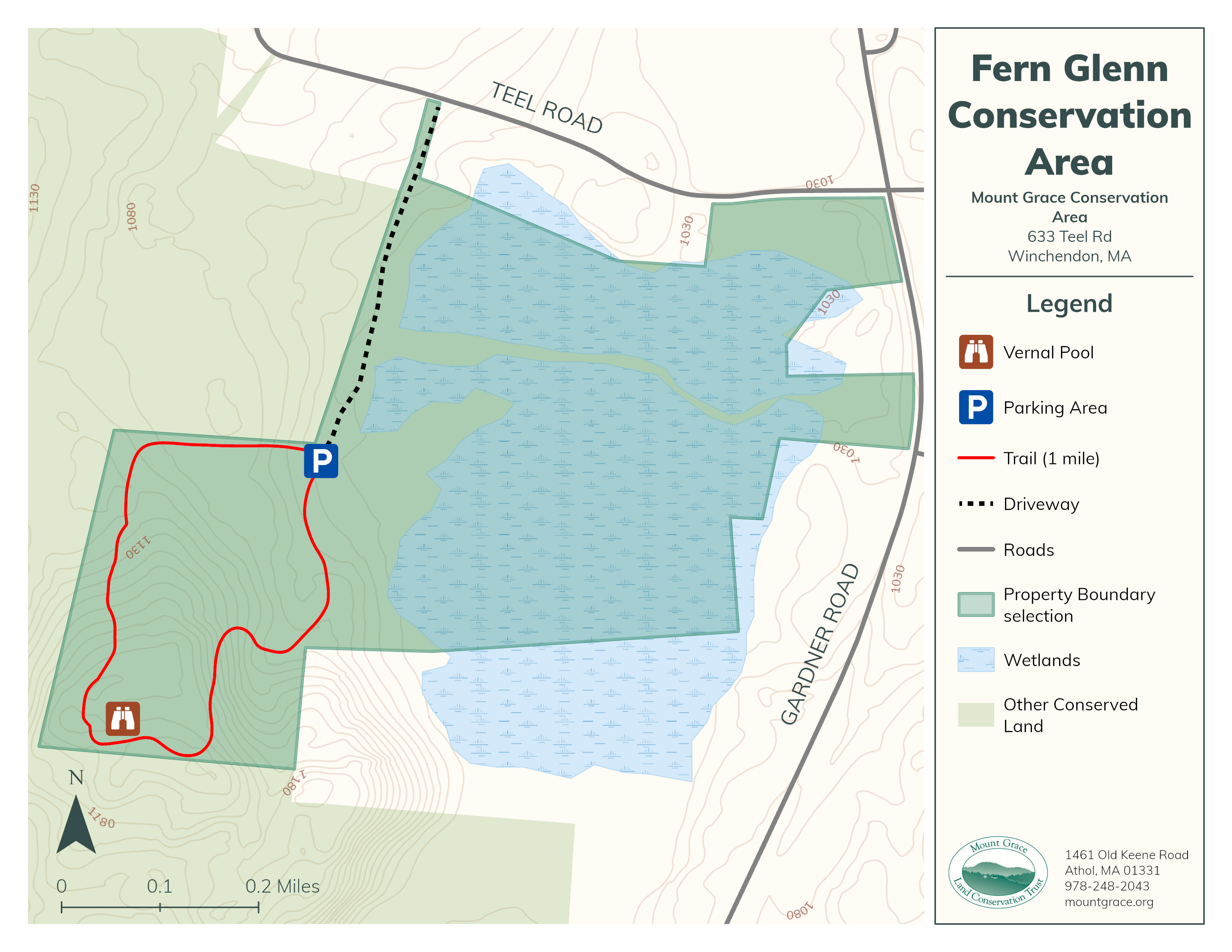
Trail Map
Activities
Directions & Parking
Public Access
Fern Glenn Conservation Area is open to the public for non-motorized outdoor recreation including hiking, bird watching, nature study, and hunting.
Directions
633 Teel Rd, Winchendon, MA 01475
From Route 140 in Winchendon, turn west onto Teel Road. 1/4 mile from this turn, see an inconspicuous dirt drive on the left between two houses. Turn south on this gravel road and proceed another quarter mile to the large clearing and parking area.
Views from the Trail


Trail Description
Fern Glenn Conservation Area Trail
The trail travels along old stone walls and through stands of sugar maple, oaks, and ash trees. The eastern side of the property is along the side of a large swamp. Hunting is permitted in the area, so be sure to wear blaze orange during hunting season.
- 1 Mile
- 154 ft Elevation Gain
- Loop
About This Property
Ownership
Mount Grace Land Conservation Trust
Gift From
Nathan J. Olson (1996)
Year Protected
2002
The trail in this 130-acre conservation area skirts gorgeous examples of two rare, contrasting natural community types: an extensive boreal swamp that dominates the eastern half of the property, and a woodland on steep talus slopes with huge old sugar maples, ash trees, and red oaks. Fern Glenn's name honors Glenn Freden, Mount Grace's forester when the trust began to manage the land, and recognizes the incredibly lush growth of ferns that give the forest understory and wetland a soft, feathery feel in the summer. Clubmosses including groundcedar, running pine, shining fir moss, and Hickey’s tree clubmoss run everywhere along the ground, looking from above like a miniature forest within a forest. Plant enthusiasts will find much to marvel at here, particularly along the fringes of the spruce-tamarack swamp where rose pogonia orchids bloom profusely in July.